
As an island region rich in culture and natural beauty, Ambon now finds itself on the front line of climate change. Yet behind these challenges, a new spirit is emerging as communities work to create innovations that protect the environment while strengthening the local economy.
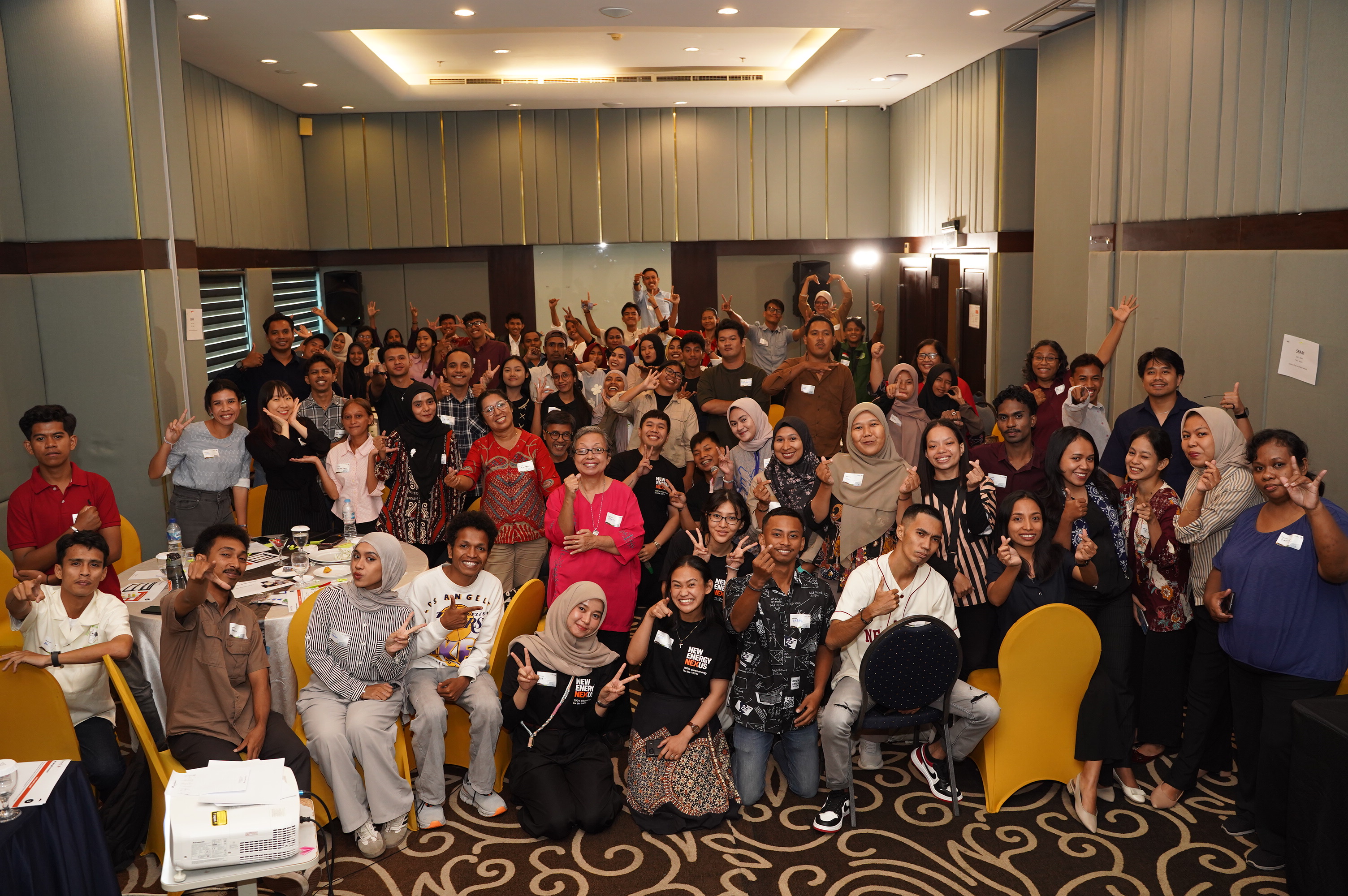
On 6 November 2025, the KINETIK NEX Climate Innovation Workshop returned and brought together 65 participants from diverse backgrounds including students, community organizers, local government, academics, and the private sector in Ambon. They gathered to shape business ideas inspired by innovation amid the ongoing effects of climate change.
On an island like Ambon, limited space often turns waste into an ongoing environmental concern. It is no surprise that one of the innovations emerging from local youth is a waste management effort that not only protects the environment but also supports the local economy.
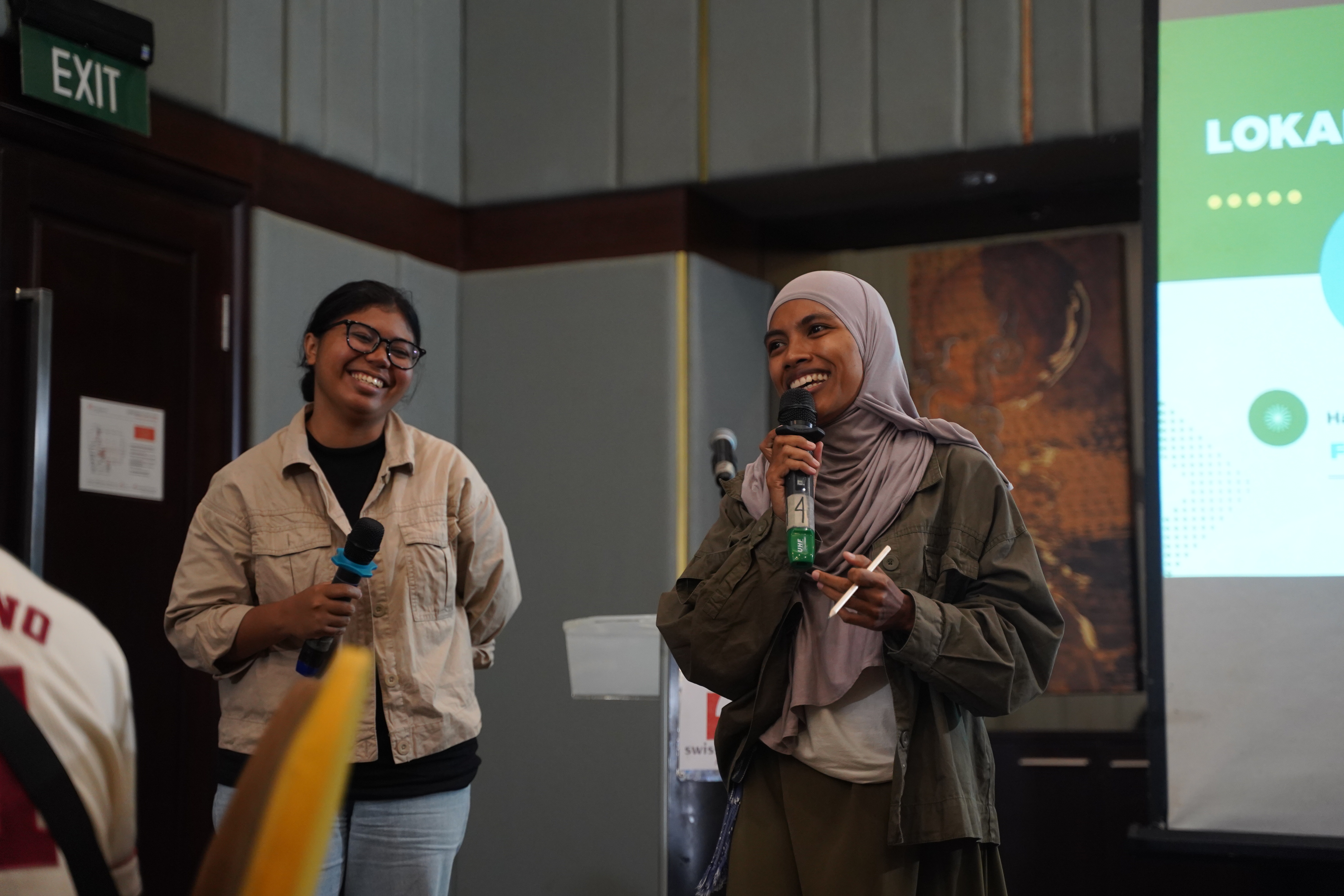
Stella dan Haje, Founder Bhupala Bank Sampah | Foto: Adri Putra
The workshop invited Stella and Haje, the two founders of Bhupala Waste Bank, to share how the waste problems around them are closely connected to climate change.
Stella has seen changes firsthand in Mardika Market, where she lives. The area never used to flood, but since 2010 temperatures have risen, rainfall has intensified, and inadequate waste management systems have caused yearly flooding. Haje added data from satellite images of the Ambon landfill, which showed expansion between 2020 and 2024, pointing to the city’s growing waste problem.
“Ambon produces 220 tons of waste every day. Only 120 to 140 tons are collected. So where do the remaining 30 to 40 tons go?” Haje asked. The participants answered together, “to the sea,” reflecting a daily reality for coastal communities in Ambon.
This situation shows a major gap in waste management that affects the ocean, which is both a food source and a key part of Ambon’s economy. In response, Bhupala Waste Bank created a circular economy model that starts with waste separation at the source, empowers waste pickers as front-line workers, and turns waste into compost, ecobrick cushions, and even biofuel.
The story of Stella and Haje shows how climate impacts can inspire sustainable, community-led solutions. A similar message came from another speaker, David Rampisela of the Maluku Youth Creative Hub. For him, nature and culture in Ambon grow together. “We are people who learn and who can read natural signs. We have survived until today because we share and practice collective wisdom,” he said. According to David, Ambon’s resilience is not only about enduring hardship but also about staying connected to nature.
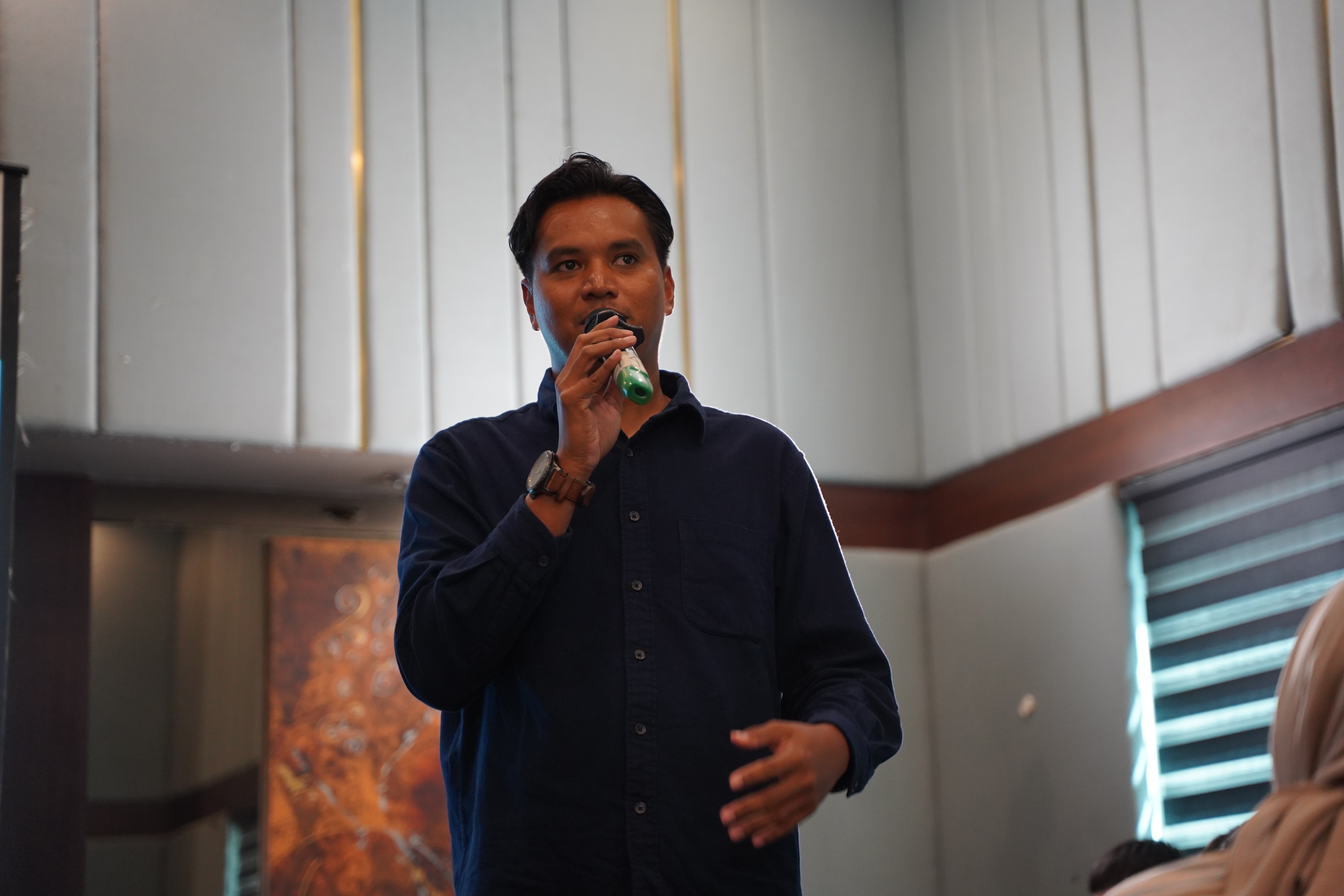
David reminded participants that innovation is often imagined as something large and high-tech. In reality, “The things we do to solve the immediate problems around us are also innovations.”
He added, “High-level innovations usually require large resources. That makes us think, ‘That is too hard for us,’ and we end up doing nothing.”
For David, innovation can grow from small steps done consistently. He shared examples such as community cultural spaces and chili farming initiatives that help strengthen the local economy.
The experiences of Haje, Stella, and David sparked creativity among participants, especially during the session where they used design thinking to develop climate solution ideas. Working in six groups, they created local innovation concepts that combine community needs, local knowledge, and everyday experience, such as:
- An integrated circular-economy waste station along riverbanks
- A maggot house and eco-enzyme system for organic waste
- A community-based waste sorting monitoring app
- Product diversification for coconuts beyond copra
- Biochar to support ecotourism
- An integrated waste management system for the Galala area
These six ideas add to the series of Climate Innovation Workshops held in Kupang, Makassar, and Ambon from September to November 2025. Each city has become a space for exchanging ideas and showing how local challenges can be the foundation for meaningful innovation.
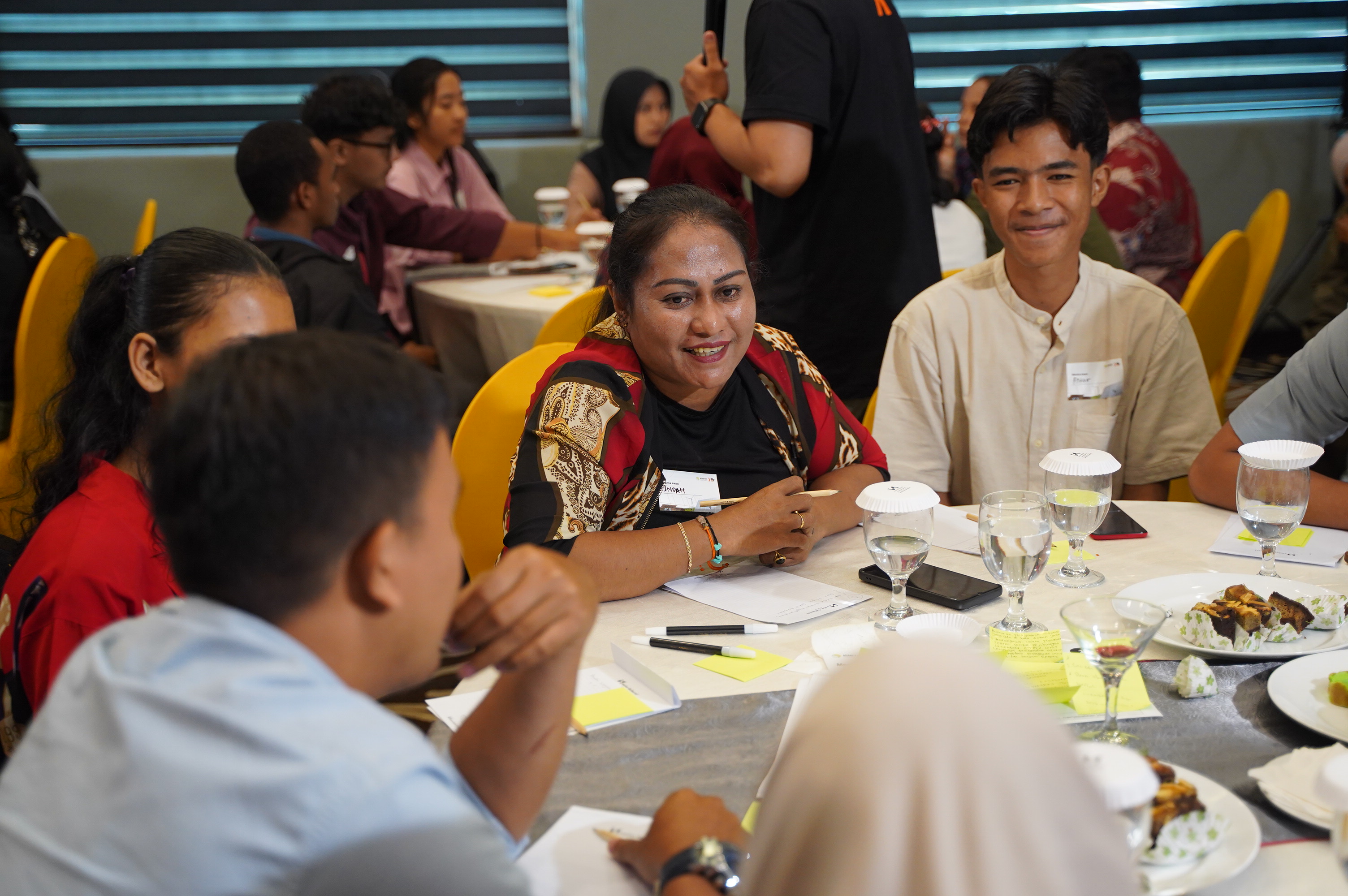
Workshop participants | Foto: Adri Putra
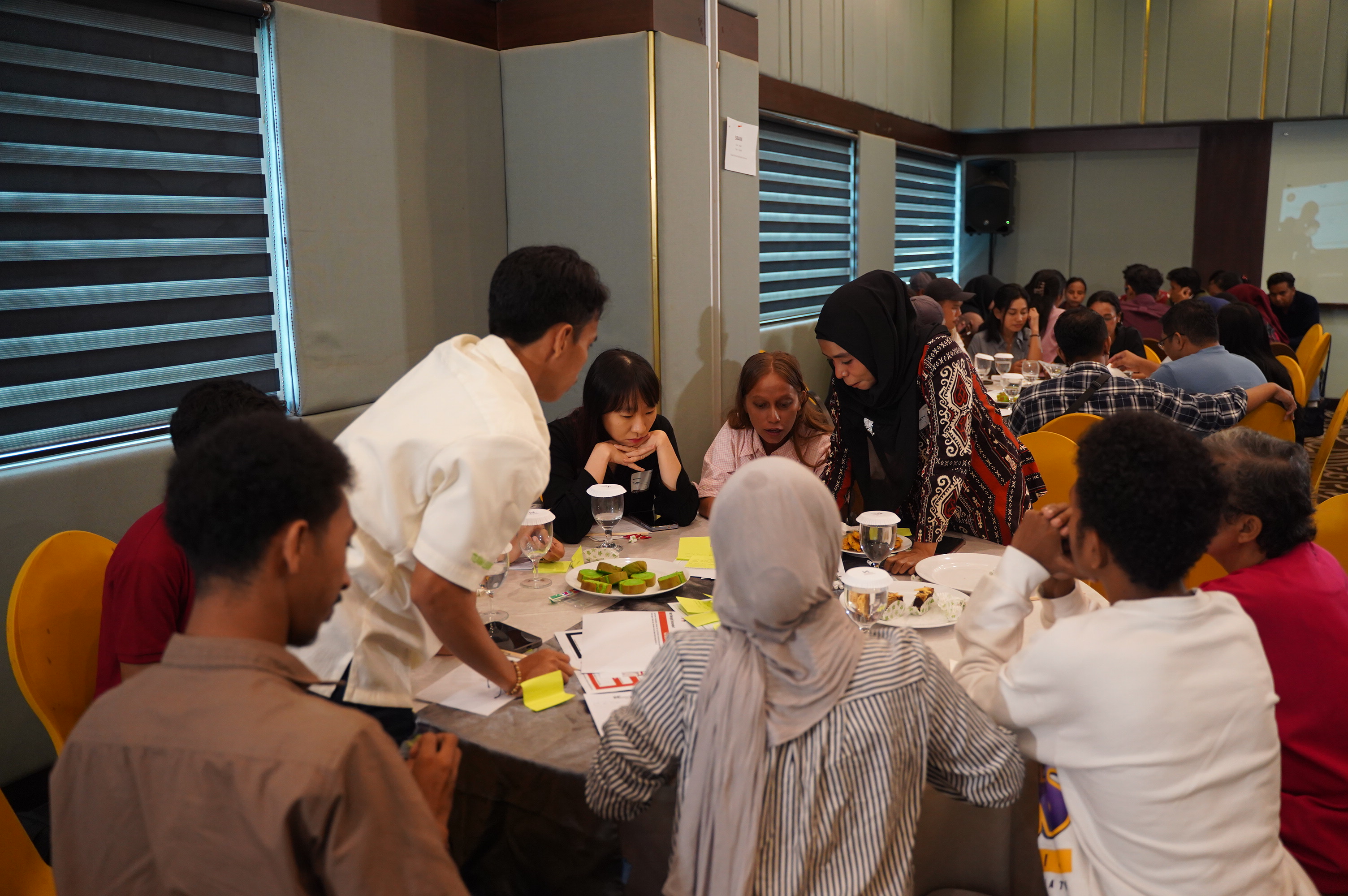
Peserta Lokakarya Workshop participants | Foto: Adri Putra
The KINETIK NEX Climate Innovation Workshops will also be part of the [RE]Spark: Clean Energy and Climate Startup Festival 2025 on 15 November 2025 at the Menara Danareksa Ballroom in Jakarta. The festival will spotlight insights from each workshop, from urban waste issues in Makassar to water scarcity in Kupang, marine pollution in Ambon, and inclusive innovations for people with disabilities. These local stories will serve as a reminder that climate solutions do not always come from big labs or expensive technology, but from communities that understand their environment and can spot opportunities within it.
Registration and more information on the Climate Innovation Workshops and the [RE]Spark: Clean Energy and Climate Startup Festival 2025 can be found at: join-nex.co/respark2025
Sampai Bakudapa!
Author: Shilfina Putri Widatama
Photos by: Adri Putra and Eluma Production House