
Makassar was named one of the cities with the highest temperatures in the world in June 2024 according to the report “People Exposed to Climate Change: March–May 2024”, which recorded an average temperature increase of up to 1.2 degrees for 92 consecutive days. Yet even as the city grows hotter, the drive among Makassar’s young people to find climate solutions is growing stronger. This spirit was reflected in the KINETIK NEX Climate Innovation Workshop, held successfully on 16 October 2025.
After its first session in Kupang at the end of September 2025, the KINETIK NEX Climate Innovation Workshop continued in Makassar as a space for cross-sector collaboration. The workshop brought together young people, community groups, local government, businesses, financial institutions, and civil society organizations to develop business ideas that match local potential and respond to climate challenges. Through discussions and first-hand insights from entrepreneurs, the workshop became a concrete step to strengthen the region’s sustainable innovation ecosystem.
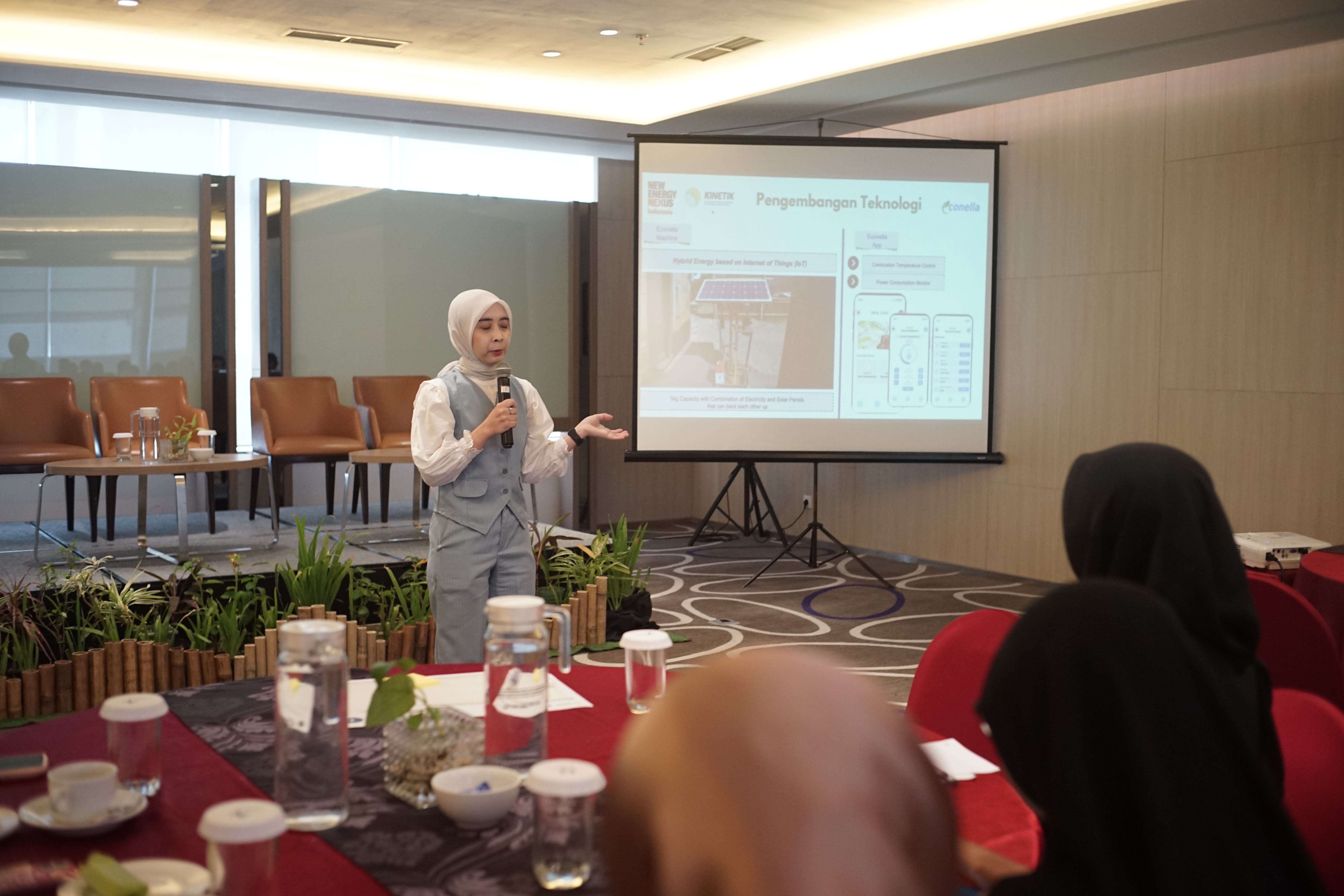
One of the speakers, Azizah Fauziah Misbahuddin, Managing Director of Econella, shared how concerns in the agriculture sector became the starting point for an innovation.
“Econella began with the story of a farmer in Pinrang named Pasha,” she said. “At that time, Pasha complained that his fuel costs had increased by 50 percent.”
The rising cost, she continued, caused a sharp drop in productivity. From there, Econella turned empathy into action. Through research that began in 2022, they transformed clove leaves and rejected citronella leaves into an environmentally friendly bioadditive that can replace fossil fuel. Econella has since grown into a business focused on alternative fuel, with farmers as one of its main target users.
Azizah also outlined four key elements for developing innovative climate-focused businesses:
- Problem-Based Thinking: starting with empathy toward issues faced by communities to identify real, needed solutions.
- Design Thinking: moving step by step from empathy to defining the problem, ideating, building prototypes, and testing to refine user-centered ideas.
- Passion–Skill Matrix: finding the meeting point between passion and skill to build sustained motivation and competence.
- The Adjacent Possible Concept: improving what already exists, adding new value, or combining two different things into a unique and useful solution.
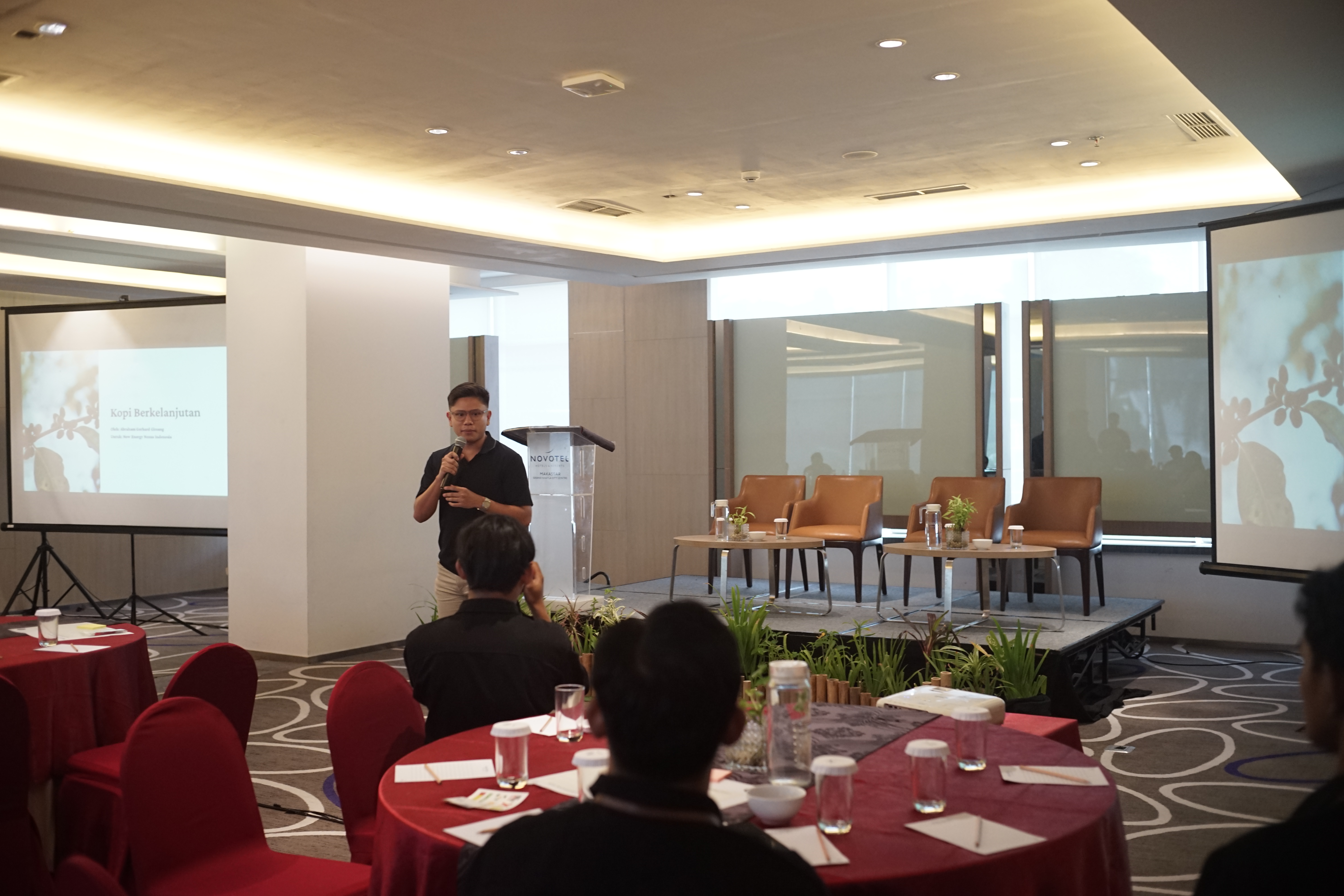
Climate sensitivity was also highlighted by Abraham G. Girsang, a coffee industry practitioner from Sulawesi, who shared how changing weather patterns affect harvests.
“Coffee is very sensitive,” he said. “It needs dry sunlight before it flowers. It cannot rain during flowering, and once the fruit appears, it cannot rain either. Coffee relies completely on nature. Now rainfall patterns are increasingly unpredictable, and this affects both growth and production.”
According to him, Indonesia’s coffee production in 2025 reached only about 10 percent of the previous year. As demand continues to grow, some farmers have shifted to other crops, contributing to a decline that is expected to continue next year.
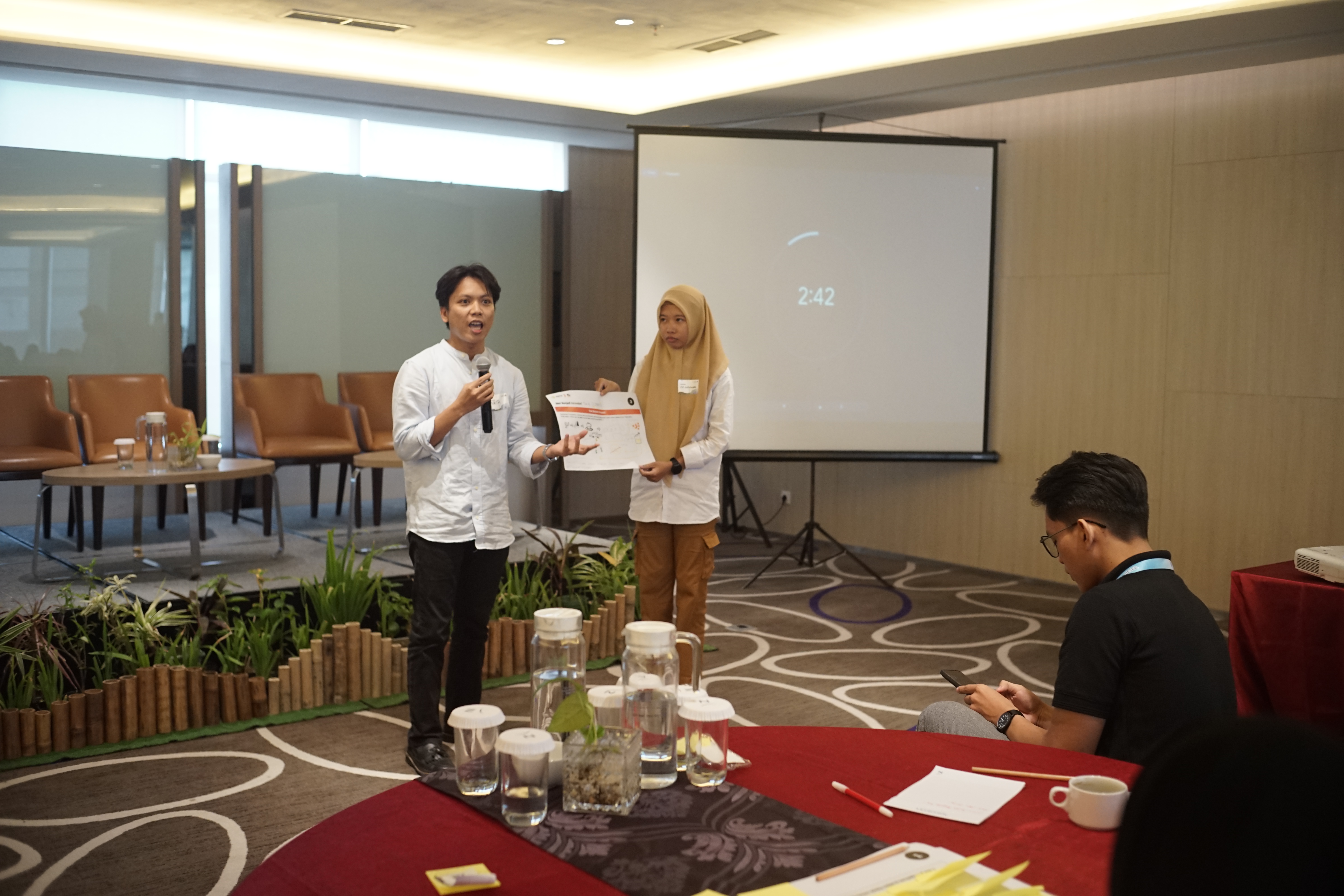
The experiences shared by Azizah and Abraham encouraged participants to see climate change not only as a challenge but also as a source of opportunity. During group sessions, participants used design thinking to identify problems and develop climate solution business ideas. Concepts ranged from turning coffee grounds into alternative energy to designing sustainable waste management systems. Many ideas emerged from collaboration across different backgrounds and highlighted the belief that change can start close to home.
In addition to new ideas, support also came from various stakeholders who help strengthen Makassar’s innovation ecosystem. Representatives from the banking sector, including Bank Sulselbar, expressed their commitment to opening access to financing for youth-led business ideas. The local government also showed its support through the Diskop Makassar MSME Incubator, which is ready to guide small and medium enterprises as they navigate economic and climate shifts.
In a time when the impacts of climate change are increasingly felt, the KINETIK NEX Climate Innovation Workshop in Makassar once again showed that opportunities for growth and collaboration are always open to those who are willing to seek solutions.
See you at the next Climate Innovation Workshop.
Author: Shilfina Putri Widatama
Photos by: Shilfina Putri Widatama and Fawwaz